Sunday, March 13, 2005
Maybe Logic is an "approach which emphasizes the fallibility and relativity of perception and tends to approach information and observations with questions, probabilities, and multiple perspectives, rather than absolute truths."
This author first articulated, in different words, just such an approach to his own eternal quest for knowledge a couple of years ago, but I cannot recall if this arose directly from reading Robert Anton Wilson; though certainly the works of his that I have read have certainly been influential and mind-expanding.
Nevertheless, the term "Maybe Logic" was unfamiliar to me when I (re-?)encountered it a few months ago, even if the process was not. When reading the material on this website, the reader should take into account all information presented in such light considering what it means vis-a-vis the probability that one proposed reality is indeed the real one among those possible.
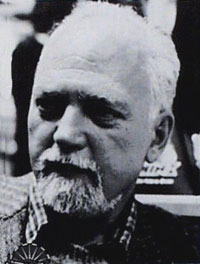 And now, more on Maybe Logic from the first issue of the Maybe Logic Quarterly Winter 2004: And now, more on Maybe Logic from the first issue of the Maybe Logic Quarterly Winter 2004: Maybe Logic is a successful departure from the dualism that has a stranglehold on today’s world. All throughout the world of today, we are surrounded by statements such as: "You are either with us, or you are against us." Here in this following statement, is another way of expressing this same sentiment: "You are either with us, or you are with the terrorists." Other ways in which this dualism appears in our world is in the 'right vs. left' political paradigm, where all people must either be completely liberal or totally conservative.
[...]
At the beginning of this twenty-first century, we can look at political dualism as it metaphorically relates to computers --- an on-off, yes-no, black-white binary system. This is done to limit the thought process of the entire population, while not telling them anything at all of the possibilities beyond this binary consideration. The result of dualism is that it turns an open-ended solution into a rather limited either-or choice. This is control in the deepest level possible, and as this expresses itself in the limited thought-processes of children hopelessly trapped in Skinner Box public-school classrooms, in a scenario that almost always leads to horrendous results. A largely ignorant populace is easier to control, and this is why students are graded not on their knowledge, but on their compliance with the behavioral system integrated into the curriculum.
...Maybe Logic is an "approach which emphasizes the fallibility and relativity of perception and tends to approach information and observations with questions, probabilities, and multiple perspectives, rather than absolute truths." In other words, there is now a third choice to the 'yes-no' binary worldview, which is the introduction of 'maybe.' And thusly, 'yes-no' becomes 'yes-no-maybe.' This is a far more realistic worldview, as there are very few solutions that are simple black-white choices. Those who seek to impose this type of limited view of the world and its' own problems, are seeking to limit our choices, and by extension, they seek to limit our very own thought-processes. .....---
.....| Posted at 03:19 | PERMA-LINK |

|

 FEED
FEED
 TOTAL411 PODCAST
 SELECTED VIDEO ]